Ars Technica AI ↗ · 2026-11-21 05:58 · UTC+8
 Google rolls out new search homepage with AI chat history and no search button
Media reports Ars Technica AI Source language: English
Google has redesigned its desktop search homepage by removing the traditional search button and adding an expandable sidebar for recent AI chat history. The update also introduces new AI-related feature buttons beneath the search bar, highlighting Google's AI-first approach.
Full text
AI creep
Google rolls out new search homepage with AI chat history and no search button
Google search is making it even easier to access AI tools on the search page.
Ryan Whitwam – Nov 20, 2026 4:58 pm | 16
A sign at the Google I/O Developers Conference in Mountain View, California on Tuesday, May 19, 2026. Credit: Getty Images | Bloomberg
A sign at the Google I/O Developers Conference in Mountain View, California on Tuesday, May 19, 2026. Credit: Getty Images | Bloomberg
Story text
Size Width * Links
* Subscribers only
Learn more
Google’s flagship search experience is evolving into an AI experience with stunning speed. Even time-tested elements of search are getting AI makeovers, and the latest to get this treatment is the search homepage on Google.com. A redesign that’s been in testing for the last few weeks is now official, bringing easier access to AI chats and dropping the dedicated search button entirely.
Google search VP Robby Stein confirmed on X that Google is deploying the new desktop search page after a successful test. The page will now have a few more buttons under the search bar, all connected to AI features. There’s an image generation button, one for analyzing files, and one for brainstorming with Gemini. The “I’m Feeling Lucky” button remains, but the Google Search button that used to sit next to it is gone.
The search button has obviously been a part of Google’s search page forever. However, it wasn’t in a very convenient location in the modern interface. When you begin typing a query, the autocomplete suggestions cover that button. You have to click out of the text field to access the button, which is an extra step compared to simply mashing the Enter key to run your search.
The new AI-centric search homepage
The new AI-centric search homepage
The other big change brings your recent AI conversations to the forefront. If you’re logged into Google, the search homepage will have an expandable sidebar on the left with your recent AI Mode search threads. This sidebar will also be accessible on the results page. According to Stein, the sidebar made a “big difference” in how people made progress on their web searches, calling it a “simpler way to pick up where you left off.”
It’s easy to feel frustrated by changes like this if you don’t like Google’s new AI approach to search. But at the same time, the loss of functionality is minimal. Google probably has usage data that shows that particular search button was rarely used. Most people probably just hit Enter or click an autocomplete suggestion to go to the results.
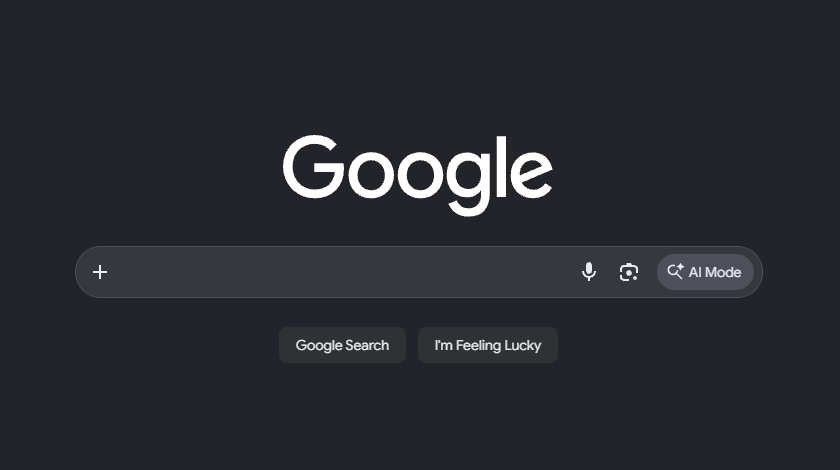
The current (old) Google search homepage.
Credit: Google
The current (old) Google search homepage. Credit: Google
This change says more about Google’s priorities and the future of search. AI features get prominent buttons, and your AI conversations now have a whole sidebar UI. Meanwhile, traditional search is increasingly de-emphasized. There may come a day when AI Mode takes over completely, forcing you to manually select the old-fashioned version of search. It does feel like Google is inching in that direction.
Ryan Whitwam Senior Technology Reporter
Ryan Whitwam Senior Technology Reporter
Ryan Whitwam is a senior technology reporter at Ars Technica, covering the ways Google, AI, and mobile technology continue to change the world. Over his 20-year career, he's written for Android Police, ExtremeTech, Wirecutter, NY Times, and more. He has reviewed more phones than most people will ever own. You can follow him on Bluesky, where you will see photos of his dozens of mechanical keyboards.
16 Comments
Sources